






I approached Perpay - Shop and Build Credit as a finance app for people who want shopping and credit-building to fit into the same routine. That combination sounds simple, but it changes how you need to use the service: this is not merely a budgeting dashboard, and it is not a general-purpose bank replacement. It sits closer to a guided shopping and payment experience, with the goal of making regular paychecks more useful while helping eligible users work toward stronger credit habits.
My first impression was that the app makes the most sense when you already have a clear reason to use it. If you need a specific household item, want to spread a purchase across payments, or are trying to create a more consistent repayment routine, Perpay gives those activities a single place. If you only want to track spending or compare every possible retailer, a traditional banking app or a dedicated budgeting tool may feel more natural.
How I would use Perpay in a normal pay-cycle routine
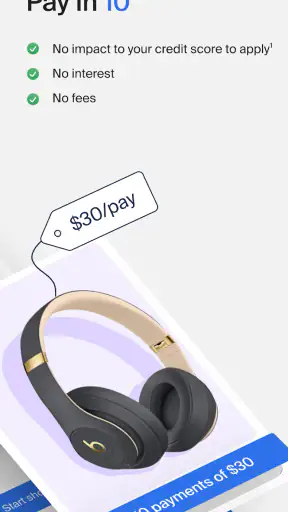
The most practical starting point is to treat the app as a planned purchase tool rather than browsing it casually. I would first decide what I actually need, check the available payment details shown for that purchase, and then compare the total commitment with my next paychecks. That last step matters because a manageable installment can still become uncomfortable when several purchases overlap.
A realistic example is replacing a broken kitchen appliance shortly before payday. Instead of buying immediately and hoping the expense fits, I would open Perpay, review the item and payment schedule, and consider whether the deductions or repayments leave enough room for rent, transport, food, and existing obligations. The useful habit is not simply choosing a payment option; it is checking the whole pay-cycle picture before committing.
That workflow also helps answer an important question: is this suitable for everyday shopping? It can be, but I would reserve it for purchases I have already planned. Using a credit-oriented shopping service for impulse purchases defeats the point of building a stable routine. The app may make a purchase feel more accessible, yet accessibility is not the same as affordability.
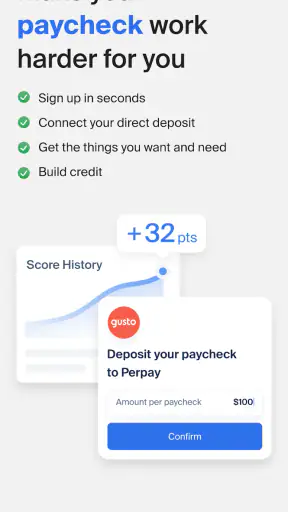
Perpay Inc. presents the app as a way to make a paycheck work harder, and I think that idea is best understood as a workflow rather than a promise of effortless savings. The value comes from connecting a purchase decision with repayment behavior. You still need to read the terms displayed for each transaction, keep track of due amounts, and avoid treating available purchasing power as spare income.
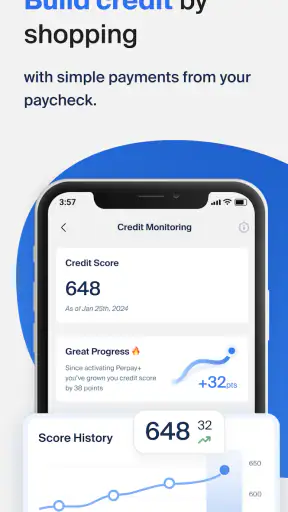
For someone new to credit-building, this distinction is especially important. The app can support consistency, but it cannot replace the basic habits that make credit management safer: paying on time, keeping commitments realistic, and checking how a new obligation fits with current ones. I would use it as one controlled part of a financial plan, not as the plan itself.
The first setup decisions affect the whole experience
During setup, I would take time to enter information carefully and review every screen involving income, payment timing, and account details. Finance apps are less forgiving of rushed setup than entertainment apps. A small error in a personal detail or a missed instruction can create unnecessary friction later, particularly when a purchase depends on accurate repayment information.
I would also make a note of the repayment dates in the same calendar or money-management system I already use. This is one of the simplest advanced habits with Perpay: do not make the app your only reminder. A separate calendar alert or recurring budget entry gives you a second checkpoint and makes it easier to spot a crowded month before it becomes a problem.
The app is free to install, which lowers the barrier to trying it, but “free” should not be read as “every transaction costs nothing.” I would inspect the purchase-specific figures and conditions before confirming anything. In financial products, the relevant cost is attached to the action you take, not only to the download button.
Perpay is available to an Everyone audience, but that broad content rating should not be confused with universal financial suitability. A person can be old enough to use an app and still be better served by saving first, buying second. I would be particularly cautious if my income changes from week to week or if I already rely on several installment plans.
Settings and account details worth checking
Experienced use begins with reviewing the account area instead of accepting every default. I would check how payment information is displayed, where transaction history appears, and how the app communicates upcoming obligations. The goal is to make the important information visible before I need it, rather than searching for it after a payment has become urgent.
I would also review notification preferences. Alerts can be helpful for keeping repayment dates in view, but too many notifications can become background noise. My preference would be to keep reminders related to payments and account activity prominent while reducing anything that encourages unplanned browsing. That turns the app from a shopping prompt into a controlled financial tool.
Another useful check is the way the app presents purchase status. Before placing a second order, I would look at existing commitments and confirm that the first one is recorded as expected. This is a small but valuable safeguard: people often remember the item they bought but forget the number of active payment schedules attached to it.
I would not assume that an approval screen or available amount represents money I should spend. Treat it as a boundary, not a target. My own rule would be to decide the maximum comfortable payment from my budget first, then see whether the app can support that purchase. Reversing those steps encourages the app to set the budget for me.
The current version is 3.8.3 and the app requires iOS 11 or later. For someone using an older device, checking compatibility before planning around the service is sensible. Once installed, I would keep the app updated through the normal device process, especially because finance apps depend on reliable account access and clear transaction information.
Shortcuts that make repeat use safer and quicker
The fastest reliable pattern is to repeat the same order of checks every time: identify the need, inspect the total obligation, review the repayment timing, and only then confirm. It may feel slower on the first few uses, but a repeatable sequence prevents the most common mistake with installment shopping—focusing on the immediate payment while ignoring the full schedule.
I would also group purchases by purpose. A necessary replacement, a seasonal expense, and a discretionary item should not all be treated as interchangeable. Separating them mentally makes it easier to cancel or postpone the least important purchase when the month becomes tight.
For regular users, a weekly two-minute review can be more useful than opening the app many times a day. I would check active purchases, upcoming payments, and any account messages during the same weekly money check I use for bills. This reduces the chance of forgetting a commitment while avoiding constant browsing.
A second practical shortcut is to save the app for decisions that benefit from its credit-building purpose. If I can comfortably pay cash without disrupting my budget, I would compare that option rather than automatically choosing a payment plan. Perpay is most useful when the structure helps me manage a planned expense and maintain disciplined repayment, not when it simply makes every purchase possible.
I would also avoid starting a new purchase immediately after receiving a payment confirmation. Instead, I would wait until the account history clearly reflects the previous activity and my own budget has been updated. That pause creates a simple separation between “the last transaction is complete” and “I am ready to take on another one.”
Where the app is stronger than ordinary alternatives
Compared with a normal shopping trip paid from a debit account, Perpay can offer a more deliberate path for someone who wants to connect purchasing with credit-related progress. A debit card gives immediate clarity but may require the full amount at once. Perpay’s appeal is the possibility of spreading the commitment while keeping repayment behavior central.
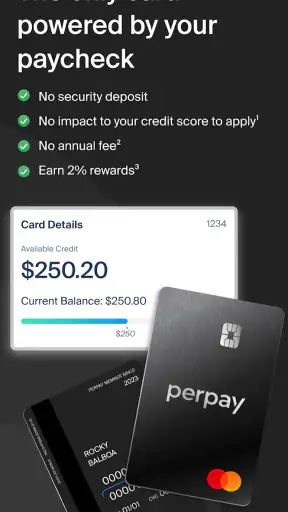
Compared with a conventional credit card, the app may feel more focused for a user who wants a purchase-by-purchase routine instead of an open revolving balance. That focus can be helpful because each planned purchase has a visible purpose. The trade-off is flexibility: a credit card may work in more places and offer broader payment options, while Perpay is tied to its own shopping and account experience.
Compared with a budgeting app, Perpay is less about seeing every account in one dashboard and more about acting on a purchase within a credit-oriented system. A budgeting app is usually better for a complete household overview, category tracking, and long-term planning. I would pair the two if I needed both visibility and a structured shopping option, rather than expecting Perpay to replace the budgeting side.
That comparison also explains who should skip it. If your main goal is cashback, travel rewards, unrestricted retailer choice, or detailed investment tracking, another finance product is likely a better match. If you are trying to eliminate all installment obligations, paying from savings or using a basic debit method may be more consistent with that goal.
Limits that deserve more attention than the shopping screen
The central limitation is behavioral. A payment plan can make a purchase look smaller at the moment of checkout, while the total responsibility remains real. I would never judge affordability from the first payment alone. The relevant question is whether every scheduled payment remains comfortable after essential expenses and existing commitments are covered.
Credit-building is also not a reason to borrow unnecessarily. The strongest routine is a modest one: use the service only for purchases I already understand, keep the repayment schedule visible, and avoid stacking commitments simply to create activity. More transactions do not automatically mean better financial progress.
Another point of friction is that the experience may require patience when account information, purchase details, or payment status need checking. Financial services cannot be evaluated like a one-tap shopping app. I would rather spend extra time reading a confirmation screen than rush through it and later discover that I misunderstood the schedule.
Privacy and account security deserve the same attention as convenience. I would use a strong device lock, avoid signing in on shared devices, and review messages carefully before responding to anything that asks for sensitive information. These are not flashy features, but they are part of using a finance app responsibly.
I would also keep expectations realistic about approval and eligibility. The presence of the app does not mean every user will receive the same shopping access or payment terms. Instead of planning a purchase around an assumed result, I would treat the in-app offer and its displayed conditions as the information that matters at that moment.
Who gets the most value from Perpay
I see the best fit in a person with regular income who wants a structured way to handle selected purchases while developing more consistent credit habits. That user is willing to check schedules, budget before buying, and use reminders. The app can also suit someone who prefers a dedicated shopping flow over managing a general credit card balance.
It may be useful for a household replacing an essential item, provided the repayment remains comfortable. It can also fit someone rebuilding financial routines after avoiding credit for a while, as long as the person starts cautiously and treats every commitment as a real bill.
I would be more hesitant to recommend it to someone with unpredictable income, several overdue accounts, or a habit of using installment plans to cover ordinary essentials. In those cases, the immediate convenience could hide a deeper cash-flow problem. A nonprofit credit counselor, a simple spending plan, or a savings-first approach may be more appropriate before adding another financial product.
The app has been available since Oct 19, 2018, and its scale suggests that many people have chosen to try this model: it has more than 1 million installs, with an average rating of 4.8 from around 13 thousand ratings and roughly 3.5 thousand written reviews. I take that as evidence of strong user interest, not as a guarantee that every financial situation will fit the service.
My verdict after building a repeatable routine
Perpay - Shop and Build Credit works best when I use it with restraint. Its strongest idea is the connection between a planned purchase and a repayment routine, giving the experience a clearer purpose than ordinary browsing. The free app is approachable, and the finance category focus makes its role easy to understand once I stop treating it like a general shopping app.
My recommendation would come with one condition: decide your budget before opening the purchase flow. Check the full obligation, keep payment reminders elsewhere as well, and review active commitments before adding another. Those habits make the app more useful and reduce the risk that convenience turns into overextension.
I would choose it over a standard credit card when I wanted a more focused purchase process, and over a budgeting app when the immediate need was structured shopping connected to credit habits. I would not choose it as my only financial tool, nor would I use it for impulse buying or to cover a persistent income shortfall.
The real advantage is not simply access to another way to shop; it is having a repeatable process for deciding whether a purchase belongs in your budget. If you can follow that process consistently, Perpay is worth considering. If you are looking for effortless credit, unlimited flexibility, or a complete view of your finances, a different option will likely serve you better.


